Loading…
Loading progress
Use the printable handout and keep the public thread available
If the Skool group is blocked logged out, keep moving with the checked public thread instead of stopping on the printable page.
handout_detail_live_thread school-day-snack-gap-what-breaks-first

Final-event guide
Gut Training
for the 1500m
A decathlete needs a practiced stomach, not just fitness, because the last race happens after two full days of eating, drinking, and cumulative fatigue.
For multis athletes preparing to race late and hard after a full competition schedule
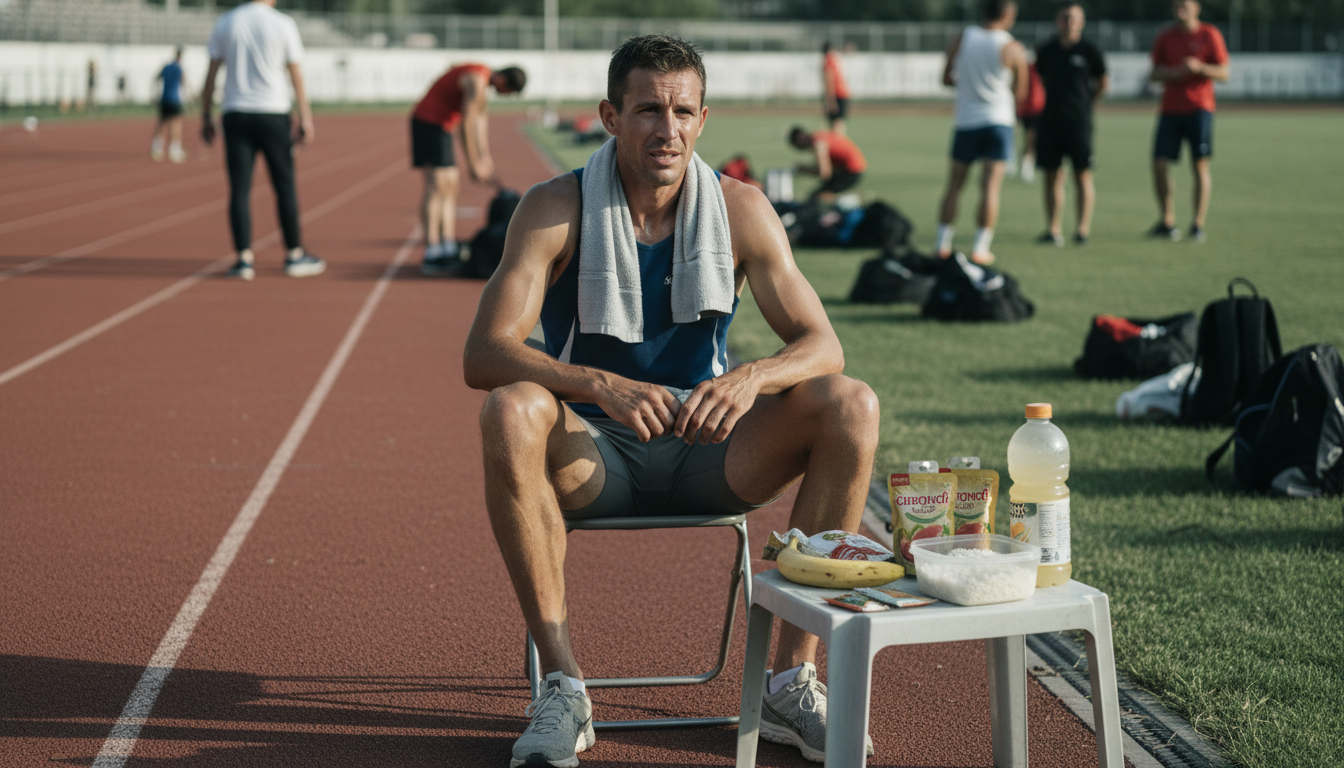
The final-event stomach needs rehearsal the same way the athlete rehearses pacing, top-off food, and the warm-up.
Train the gut on purpose
- The athlete should practice running with the same kind of late-meet food and fluid they expect to use in competition.
- A stomach that rarely sees fuel in training is more likely to revolt on championship day.
- Gut tolerance is trainable when the exposures are gradual and specific.
The final multis event gets safer when the athlete trains the stomach with the same seriousness as the legs.
Use the final-event bridge
- The hour before the 1500m usually needs lighter, clearer fuel choices than the rest of the day.
- The athlete should know when solids stop and when sips or soft carbs take over.
- The bridge plan should feel calm and rehearsed, not like a gamble.
Respect the cumulative load
- Two days of events change digestion, stress, and how much the athlete can tolerate at once.
- The goal is enough fuel without creating stomach drag.
- The right plan keeps the athlete ready to run, not full for the sake of feeling prepared.
Final-event reminders
- Gut tolerance needs rehearsal too.
- The final hour usually calls for lighter fuel choices.
- Late-race fueling should feel practiced, not brave.
Next action
Need more family support?
Scan to join the free Aspire Runner Fueling Lab.
https://aspireperformancerd.com/runner-fueling-lab?source=handout-gut-training-for-the-1500m-racing-at-the-end-of-a-decathlon-print