Aspire guide
Team Resources
Team Resources manual
Building Healthy Team Culture
Create a team environment that promotes healthy relationships with food.
Why this matters
Create a team environment that promotes healthy relationships with food.
Read time
3 min
Audience
Coach
Use it for
Team Resources
Start here
Healthy culture is not a poster.
Coach prompt
Pick one language change and one environment change your staff will implement this week.
Print & share
Printable handout preview
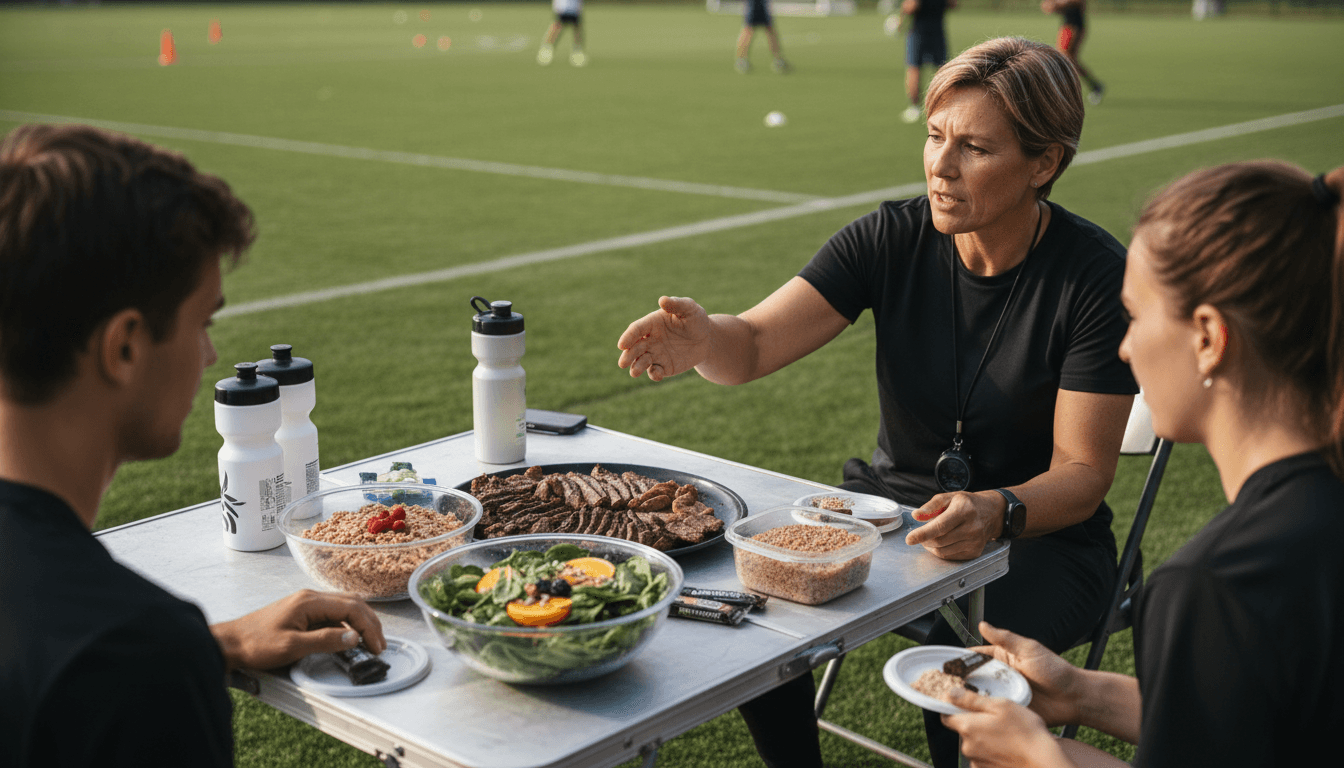
One-page sheet
Building Healthy Team Culture
Read time
3 min
Audience
Coach
Start with the printable
Healthy culture is not a poster.
Best next move
Use it this week
Pick one language change and one environment change your staff will implement this week.
Quick reference map
Use the guide like a structured handout
Protocol
Start here
Jump to this section and use it like a coaching quick reference.
Overview
TL;DR Card
Jump to this section and use it like a coaching quick reference.
Timeline
Team Norms to Set
Jump to this section and use it like a coaching quick reference.
Overview
Why Culture Matters
Jump to this section and use it like a coaching quick reference.
In the library
Format
Read the full ebook here, then jump to the one-page handout when you need the shareable version.
Best use
Open the sections you need, print the handout, then send both to coaches, parents, or athletes.
Quick start
Start here
Create a team environment that promotes healthy relationships with food.

Language
Talk about fuel, readiness, and recovery instead of body size
- Athletes hear the daily standard through casual comments more than formal talks.
- Performance language keeps the message clear and safer.
Environment
Make good fueling visible and easy to do
- Snack bins, water access, and handouts change culture faster than slogans alone.
- The team should see food as part of training flow, not a side issue.
Home alignment
Send one clear parent message early
- Ask families to support breakfast, a practice snack, and recovery food first.
- Simple home expectations beat long nutrition lectures.
TL;DR Card
- Team culture shapes athlete nutrition behavior more than one-off talks.
- No body comments, no public weigh-ins, and no food shaming.
- Praise fueling, recovery, consistency, and sleep habits.

Team Norms to Set
We fuel before hard training.
We recover after training.
We do not comment on bodies.
We do not shame food choices.
Context
Why Culture Matters
- Athletes learn from coaches and teammates.
- Norms around food and bodies affect eating behavior.
- Healthy culture makes the right choice feel normal.
Team Meals and Events
- Offer variety.
- Make all options acceptable.
- Do not monitor portions.
This Week
Align all coaches on the same language: fuel, recovery, readiness, sleep.
Make water and recovery snacks easy to see and easy to grab.
Send one short parent message that explains the team standard.
When to Refer
Repeated fatigue or poor recovery.
Food fear, restriction, or fast weight change.
Stress injuries or other RED-S warning signs.
Any concern that is bigger than coaching scope.
Quick reference
Key targets to keep in view
Use these as planning anchors when you turn the manual into weekly actions.
Coach language
sets the tone first
Treat this as a decision anchor, not a trivia stat.
Snack access
culture becomes visible
Treat this as a decision anchor, not a trivia stat.
Parent message
keeps home aligned
Treat this as a decision anchor, not a trivia stat.
Coach takeaways
Coach reminder
These are the cues worth repeating before the week gets busy.
Normalize
Fuel talk tied to performance.
Water, snacks, and recovery in daily flow.
Send home
One parent message early.
Simple asks families can repeat.
Never normalize
Body comments.
Restriction, weigh-ins, or unsafe supplement talk.
What to do next
Use it this week
Pick one language change and one environment change your staff will implement this week.
Source topics
Mountjoy M, Sundgot-Borgen JK, Burke LM, et al. (2023) IOC 2023 consensus statement on REDs. British Journal of Sports Medicine, 57:1073-1098. • De Souza MJ, Nattiv A, Joy E, et al. (2014) 2014 Female Athlete Triad Coalition consensus statement. British Journal of Sports Medicine, 48(4):289.