

Aspire guide
Injury Recovery
Injury Recovery manual
Nutrition for Stress Fracture Recovery
Optimize bone healing with proper energy, calcium, and vitamin D intake.
Why this matters
Optimize bone healing with proper energy, calcium, and vitamin D intake.
Read time
5 min
Audience
Athlete + Coach + Parent
Use it for
Injury Recovery
Start here
Bone healing speeds up when the athlete stops trying to recover on too little food.
Coach prompt
Keep breakfast, lunch, dinner, and snacks on a schedule.
Print & share
Printable handout preview
One-page sheet
Nutrition for Stress Fracture Recovery
Read time
5 min
Audience
Athlete + Coach + Parent
Start with the printable
Bone healing speeds up when the athlete stops trying to recover on too little food.
Best next move
Use it this week
Keep breakfast, lunch, dinner, and snacks on a schedule.
Quick reference map
Use the guide like a structured handout
Protocol
Start here
Jump to this section and use it like a coaching quick reference.
Overview
Energy
Jump to this section and use it like a coaching quick reference.
Timeline
First rule: do not turn injury into a diet phase
Jump to this section and use it like a coaching quick reference.
Timeline
When to think beyond the bone
Jump to this section and use it like a coaching quick reference.
In the library
Format
Read the full ebook here, then jump to the one-page handout when you need the shareable version.
Best use
Open the sections you need, print the handout, then send both to coaches, parents, or athletes.
Quick start
Start here
Optimize bone healing with proper energy, calcium, and vitamin D intake.

First principle
Bone does not heal well in a calorie deficit
- If intake stays low, remodeling slows.
- Athletes often underestimate how much healing still costs.
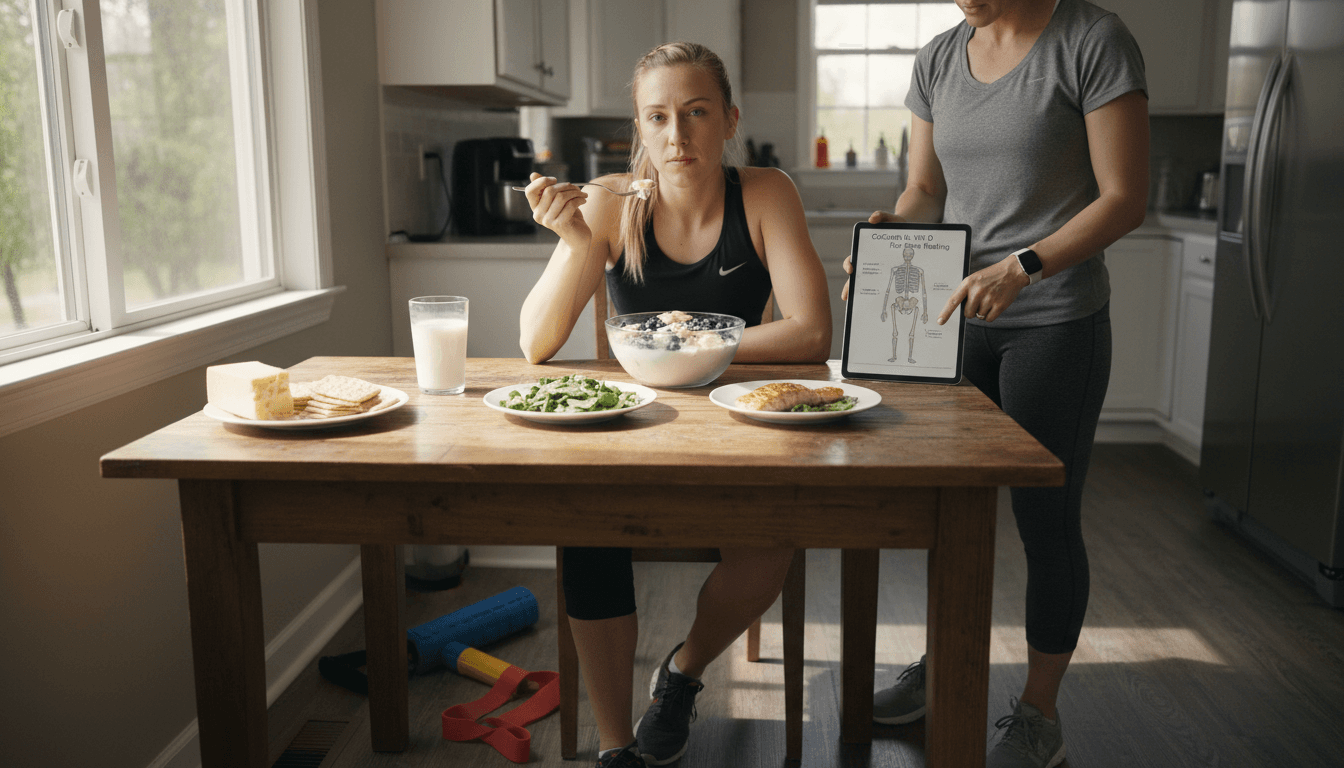
Build the plate
Calcium, vitamin D, protein, and carbs all matter
- Bone repair needs more than one magic nutrient.
- Use dairy or fortified alternatives plus regular protein foods.
Find the cause
Ask why the fracture happened in the first place
- Low energy availability is common in adolescent runners.
- Irregular periods, heavy fatigue, or weight loss change the plan.
Energy
Keep meals and snacks regular.
Keep meals and snacks regular. Most injured athletes do better with three real meals plus two or three planned snacks than with trying to "be good" all day and then eating chaotically at night. The bone is healing around the clock, so the fuel has to show up around the clock too.
First rule: do not turn injury into a diet phase
The most common mistake is slashing calories because the athlete is not running full volume.
Tissue repair costs energy.
Immobilization and healing raise protein needs, not lower them.
Restriction during recovery increases the chance that healing drags and bone health stays…
When to think beyond the bone
A stress fracture should trigger a better question than "how fast can I run again?"
Was the athlete under-fueled before the injury?
Were periods irregular or missing?
Was there recent weight loss or food restriction?
Has there been more than one bone-stress issue?
Parent and coach checklist
Keep breakfast, lunch, dinner, and snacks on a schedule.
Put calcium-rich foods in the plan multiple times per day.
Make protein obvious at every meal.
Do not let the athlete self-prescribe a restrictive plan during downtime.
Escalate early if bone stress is recurring, menstrual function is off, or food fear is part of the…
Go deeper next
Screen the bigger under-fueling pattern: RED-S Warning Signs and Prevention
Build a safer referral path
When to Seek Professional Help
If the athlete also looks iron depleted: Iron Deficiency in Female Runners
Protein
Spread protein-containing foods across the day rather than loading it all at dinner.
Spread protein-containing foods across the day rather than loading it all at dinner. A stress fracture is not the time for one tiny breakfast, one decent dinner, and no recovery snack in between. Think a palm of protein at each meal — eggs, Greek yogurt, milk, chicken, fish, beans, tofu — plus a protein-containing…

Quick reference
Key targets to keep in view
Use these as planning anchors when you turn the manual into weekly actions.
Protein
Spread daily
Treat this as a decision anchor, not a trivia stat.
Calcium foods
Daily
Treat this as a decision anchor, not a trivia stat.
Red flag
Low energy
Treat this as a decision anchor, not a trivia stat.
Coach takeaways
Use this with athletes
These are the cues worth repeating before the week gets busy.
Protect energy
Do not let appetite decide recovery.
Feed the bone
Calcium-rich foods, protein, produce, and carbs.
Fix the pattern
Treat the fracture cause, not only the fracture site.
What to do next
Use it this week
Keep breakfast, lunch, dinner, and snacks on a schedule.
Source topics
Mountjoy M, Ackerman KE, Bailey DM, et al. IOC consensus statement on Relative Energy Deficiency in Sport (REDs): 2023 update. Br J Sports Med. 2023;57(17):1073-1097. • Thomas DT, Erdman KA, Burke LM. Position of the Academy of Nutrition and Dietetics, Dietitians of Canada, and the American College of Sports Medicine: Nutrition and athletic performance. J Acad Nutr Diet. 2016;116(3):501-528. • Clénin GE, Cordes M, Huber A, et al. Iron deficiency in sports: definition, influence on performance and therapy. Swiss Med Wkly. 2015;145:w14196.