

Aspire guide
Team Resources
Team Resources manual
The Five-Hour Gap: Coaching Nutrition Around a Bell Schedule You Cannot Change
Lunch at 10:40, practice at 3:15. The operational guide to the school-day gap: reading the bell schedule, open versus closed campus, vending and concession triage, the athlete with no money, the athlete who cannot eat before running, zero-hour lifts, and the seven things a coach can actually change.
Why this matters
Read time
25 min
Audience
Coach + Parent
Use it for
Team Resources
Start here
You cannot move the bell, but you can move the bus, the bin, and the last 30 seconds.
Coach prompt
Which athlete has the earliest lunch wave, and when is that athlete actually allowed to eat?
Print & share
Printable handout preview
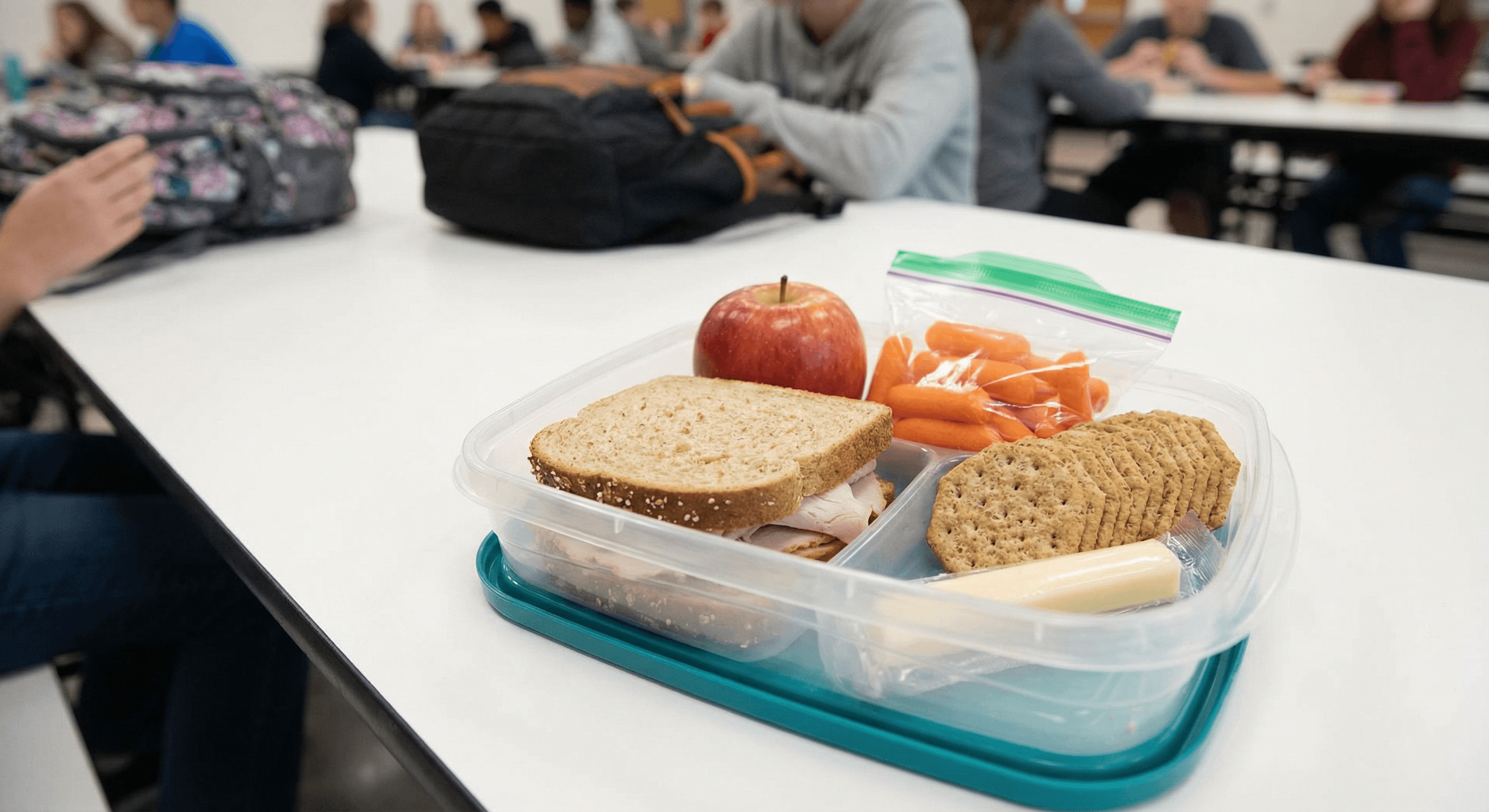
One-page sheet
The Five-Hour Gap: Coaching Nutrition Around a Bell Schedule You Cannot Change
Read time
25 min
Audience
Coach + Parent
Start with the printable
You cannot move the bell, but you can move the bus, the bin, and the last 30 seconds.
Best next move
Use it this week
Which athlete has the earliest lunch wave, and when is that athlete actually allowed to eat?
Quick reference map
Use the guide like a structured handout
Protocol
Start here
Jump to this section and use it like a coaching quick reference.
Overview
What the gap actually costs, and the honest limit on that claim
Jump to this section and use it like a coaching quick reference.
Overview
The seven things a coach can actually change
Jump to this section and use it like a coaching quick reference.
Overview
Where a coach's job ends
Jump to this section and use it like a coaching quick reference.
In the library
Format
Read the full ebook here, then jump to the one-page handout when you need the shareable version.
Best use
Open the sections you need, print the handout, then send both to coaches, parents, or athletes.
Quick start
Start here
Lunch at 10:40, practice at 3:15.
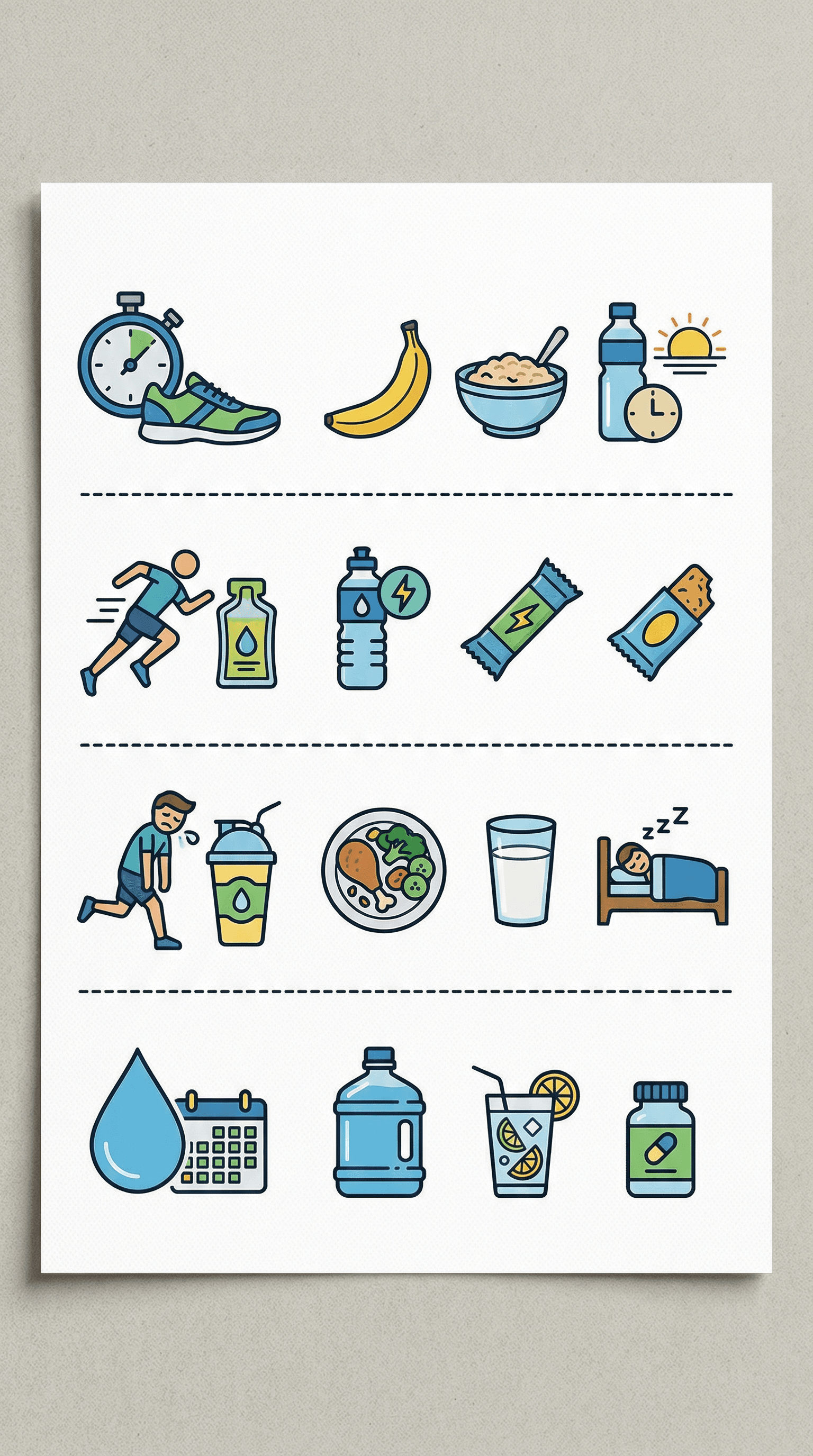
Read your own bell schedule
- Lunch waves are set by fourth-period rooms, not by who is training.
- Log lunch, last bell, practice, and the one period eating is allowed.
Windows
Three openings, anchored to bells
- Two hours out is the best one: a sandwich half, crackers, a real bar.
- Last bell, 30 minutes out: fast carbs, low fat and fibre, kept small.
Access
Food at practice, for everyone
- Universal, silent, daily — a need-based snack singles kids out.
- Never comment on a kid's food, and never make it conditional.
What the gap actually costs, and the honest limit on that claim
Hard running is fuelled primarily by carbohydrate stored in the working muscle as glycogen.
Hard running is fuelled primarily by carbohydrate stored in the working muscle as glycogen. That store is rebuilt from food over hours, not minutes, which is why the fix for a flat Thursday is rarely something eaten at 3:10 on Thursday.
The store that runs down across the school day is a different one. Liver glycogen is what holds blood glucose steady between meals, and it draws down over a long fast. That is the mechanism behind the presentation coaches actually see at 3:30, which is as much cognitive as muscular: not cramping legs, but a flat,…
The part that matters more than any single session is what happens across a week. An athlete who is short at 3:30 trains a little worse, recovers a little less, eats a normal dinner that now has to cover a larger hole, and starts Friday further behind than she started Thursday. The failure mode is not one bad…

The seven things a coach can actually change
Nothing above requires the school to change.
Nothing above requires the school to change. These are inside a coach's control.
1. Know each athlete's lunch wave. Ten minutes in August. It converts a vague team-wide worry into two or three specific plans.
2. Set a team snack norm and make it universal. One cooler or bin, one place, every day, no sign-up, no comment, everyone. The norm is what does the work — an athlete who sees six teammates take something will take something.
Where a coach's job ends
Everything in this guide is scheduling, logistics and food access.
Everything in this guide is scheduling, logistics and food access. That is genuinely most of the problem, and it is squarely inside a coach's lane.
What is not: diagnosing why an athlete is not eating, managing a clinical gut condition, negotiating a medical accommodation informally, or handling a suspected eating disorder inside the program. Persistent gut symptoms, a pattern of eating less across the whole day, a change in growth or development, or a family's…
Practical next step. Print the one-page version of this guide and put it where you plan the season. Then do the ten-minute roster exercise before the first week of practice, and ask your food-service director the three questions. Those two things together close most of this gap before it opens.
Closed campus
Whatever the athlete eats between lunch and practice either came through the front door in a backpack at 7:15 in the morning, or was bought on site.
The morning is the intervention. A snack that gets packed at 7:00 is a snack that exists at 2:00.…
Backpack survivability is a real constraint, not a detail. A snack lives seven hours in a bag that…
A locker or bag stash beats a daily decision. Two or three shelf-stable items restocked on Sunday…
Where eating is actually legal
This is the part that surprises coaches who have never had to solve it for a specific athlete: plenty of kids are carrying a snack they never eat, because there is nowhere in…
Many classrooms ban food outright, and teacher-to-teacher variation is enormous. The same athlete…
Science labs ban food for a real reason. Do not coach an athlete into a fight with a chemistry…
The passing period is four to six minutes. That is genuinely enough for a bar, a pouch, or a…
The bus, the locker room, and the walk to practice are the reliable windows on most campuses, and…
The athlete who cannot eat before running
Some athletes genuinely cannot eat before hard running without gut symptoms.
Move the timing before you change the food. The same snack ninety minutes out is a different…
Go liquid first. A sports drink, diluted juice, or a small smoothie is tolerated by nearly…
Then semi-solid. An applesauce or fruit pouch, a banana, a small yoghurt drink.
Then small and solid, keeping fat and fibre low: crackers, pretzels, a plain bagel piece, a…
Change one variable at a time and give it two weeks. A single bad day proves nothing; a pattern…
Quick reference
Key targets to keep in view
Use these as planning anchors when you turn the manual into weekly actions.
Lunch to first rep
4h 55m
Treat this as a decision anchor, not a trivia stat.
Best window
2 hr out
Treat this as a decision anchor, not a trivia stat.
Roster setup
10 min
Treat this as a decision anchor, not a trivia stat.
Coach takeaways
Coach checklist
These are the cues worth repeating before the week gets busy.
Do this in August
Log each athlete's lunch wave and their one legal eating period.
Ask the food-service director the three questions in the guide.
Say this every day
Eat something in the next hour, whatever it is.
Name where the bin is, out loud, so nobody has to ask.
Before away meets
Does the bus leave before the last lunch wave is served?
Move departure ten minutes, or hand food out on the bus.
What to do next
Use it this week
Which athlete has the earliest lunch wave, and when is that athlete actually allowed to eat?
Source topics
school day fueling gap • lunch to practice gap • closed campus nutrition • vending machine athlete snacks • team snack norm • afterschool snack program