

Aspire guide
Race Day Nutrition
Race Day Nutrition manual
When the Start Time Moves: Fueling Against a Schedule That Slides
Heats move, JV races get held, and meets run early. A countdown built off the printed start time breaks the moment the schedule slips — this is the anchor-and-float system that survives it, plus the signals that actually predict the real start.
Why this matters
Read time
11 min
Audience
Coach + Parent + Athlete
Use it for
Race Day Nutrition
Start here
Hold the big decision early and keep the late one small enough that being wrong is free.
Coach prompt
Announce one anchor time on arrival, and give one person the race-two-ahead watch.
Print & share
Printable handout preview

One-page sheet
When the Start Time Moves: Fueling Against a Schedule That Slides
Read time
11 min
Audience
Coach + Parent + Athlete
Start with the printable
Hold the big decision early and keep the late one small enough that being wrong is free.
Best next move
Use it this week
Announce one anchor time on arrival, and give one person the race-two-ahead watch.
Quick reference map
Use the guide like a structured handout
In the library
Format
Read the full ebook here, then jump to the one-page handout when you need the shareable version.
Best use
Open the sections you need, print the handout, then send both to coaches, parents, or athletes.
Quick start
Start here
Heats move, JV races get held, and meets run early.
The anchor
Three hours, published start
- At three hours a 45-minute delay or a 20-minute early call both still work.
- Familiar, carb-forward, low fat and fibre, normal portion.
The float
One small thing, held back
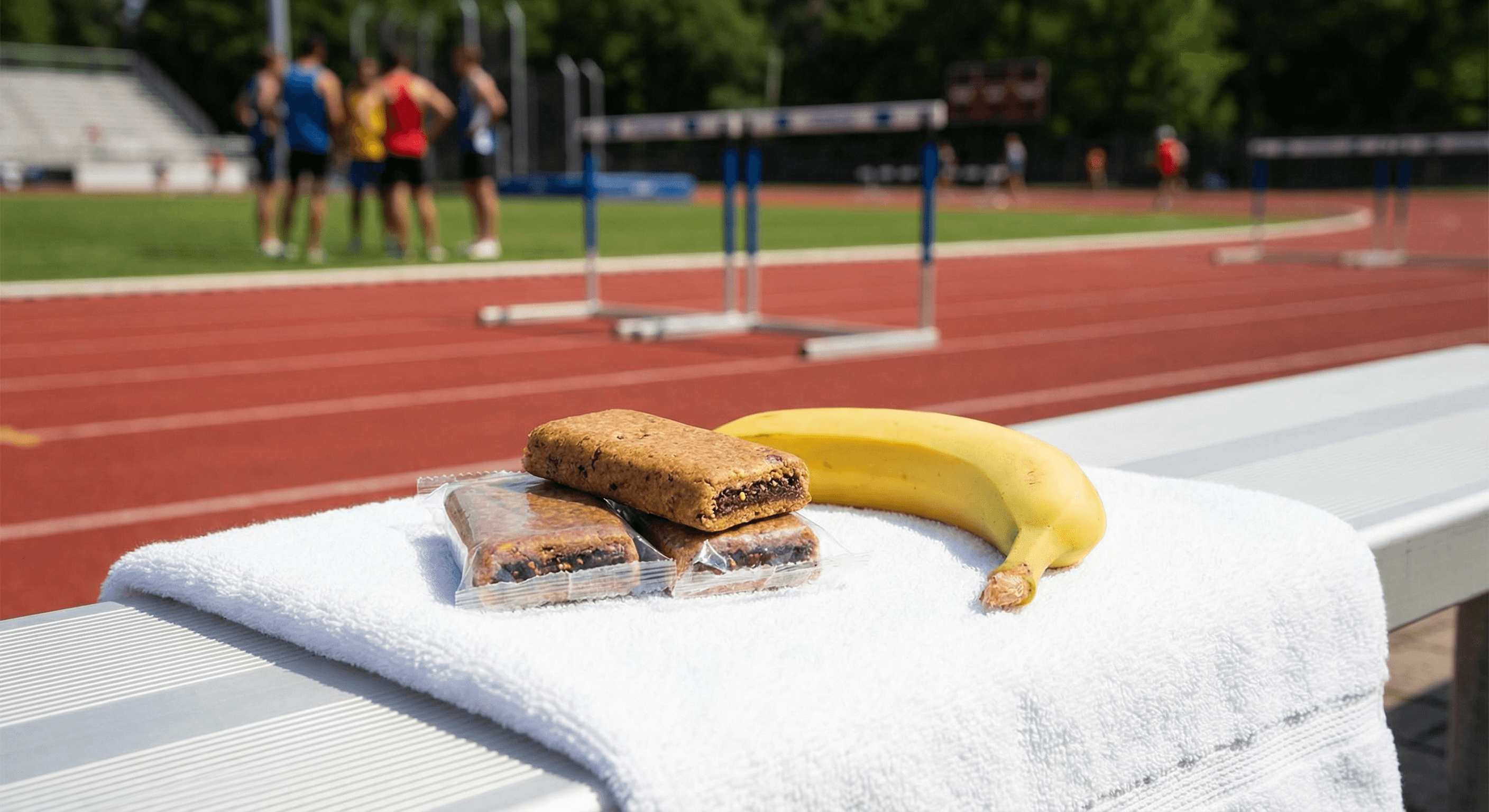
- Half a bagel, a fig bar, some pretzels, a few ounces of sports drink.
- Its job is stopping hunger at the line, not fuelling the race.
The real clock
Watch the race two ahead
- Delays propagate forward almost perfectly; the printed schedule does not.
- Give one person the job of reporting it back to the tent.
Where the guidance runs out, honestly
It is worth being straight about this, because the depth of a claim should match the depth of its evidence.
the pre-event window is wide (one to four hours), so a meal placed in its middle tolerates slippage;
the failure mode close to a start is volume, fat and fiber, not carbohydrate per se; and
an event lasting under about 45 minutes does not require carbohydrate during it at all, which…
Context
Why a T-minus countdown breaks
A countdown is a fixed-point plan.
A countdown is a fixed-point plan. It has exactly one input — gun time — and that input is an estimate that gets revised all morning.
Watch it fail in both directions.
The meet runs late. The athlete tops off at what they believe is 60 minutes to the gun. The race actually goes off 45 minutes later than printed. That top-off has now landed 105 minutes out, and the athlete is standing on the line hungry, irritable, and mentally rehearsing a snack instead of a race.
Unlock the rest of the manual
Full access opens every section, the ebook PDF, and the printable handout companion.
What to do next
Use it this week
Announce one anchor time on arrival, and give one person the race-two-ahead watch.
Source topics
meet delay nutrition • race start time changed • heats running late • JV race delayed eating • cross country meet schedule slip • when to eat before a race