When to use this
When a growing runner has bone pain, a training jump, or a stress-fracture history and the family asks what food can do.
- A teen runner has a first stress reaction or recurring shin problems.
- Mileage just jumped while cycles are irregular or intake looks thin.
- A parent asks about calcium foods, or whether the athlete needs a vitamin D check — the second half is the physician's call.
Advanced lab
Hitting the adolescent calcium target with food
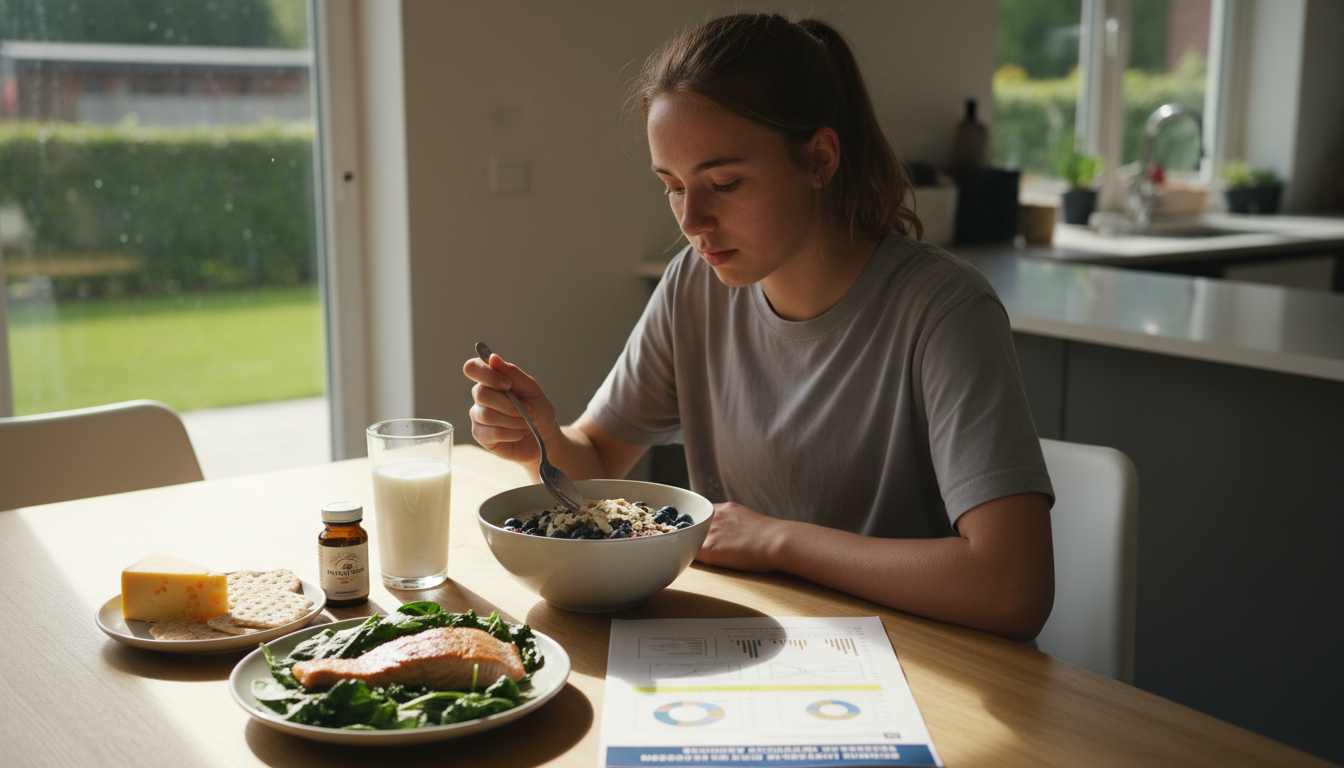
Calcium needs run high through the teen years, and most runners land well short. Here is how the food adds up across a normal day.
Bone pain, repeat bone stress injuries, or menstrual changes need a physician, and the fueling behind them needs a sports dietitian. The intake figures here describe what to eat; the blood figures describe what a clinician weighs. Neither is a plan to start on — whether to test, image a bone, or put an athlete on anything is the physician's call with the family. Aspire publishes no bone-density number and no body-weight or body-composition figure for a growing athlete.
Evidence sources
These references support the handout’s general education. Individual medical, supplement, laboratory, or injury questions should be handled by the appropriate qualified clinician.
- De Souza MJ, Nattiv A, Joy E, et al. (2014) 2014 Female Athlete Triad Coalition consensus statement. British Journal of Sports Medicine, 48(4):289.
- Smith JW, Holmes ME, McAllister MJ. (2021) Nutritional considerations for performance in young athletes. Nutrients, 13(12):4267.
- Owens DJ, Allison R, Close GL. (2018) Vitamin D and the athlete: Current perspectives. Sports Medicine, 48(S1):S17-S29.
Where to go next