

Aspire guide
Hydration
Hydration manual
Cold Weather Hydration Myths
Why you still need to hydrate in winter and how to stay on track.
Why this matters
Why you still need to hydrate in winter and how to stay on track.
Read time
6 min
Audience
Athlete + Coach
Use it for
Hydration
Start here
Cold weather lowers thirst, not fluid needs.
Coach prompt
Map the athlete's winter drinking pattern across the school day, not just practice.
Print & share
Printable handout preview
One-page sheet
Cold Weather Hydration Myths
Read time
6 min
Audience
Athlete + Coach
Start with the printable
Cold weather lowers thirst, not fluid needs.
Best next move
Use it this week
Map the athlete's winter drinking pattern across the school day, not just practice.
Quick reference map
Use the guide like a structured handout
Protocol
Start here
Jump to this section and use it like a coaching quick reference.
Overview
The Myth: You Don't Need to Hydrate in Cold Weather
Jump to this section and use it like a coaching quick reference.
Protocol
A field protocol coaches can actually repeat
Jump to this section and use it like a coaching quick reference.
In the library
Format
Read the full ebook here, then jump to the one-page handout when you need the shareable version.
Best use
Open the sections you need, print the handout, then send both to coaches, parents, or athletes.
Quick start
Start here
Why you still need to hydrate in winter and how to stay on track.

Myth one
Feeling less thirsty does not mean the athlete is staying well hydrated
- Cold air, indoor heat, and reduced thirst often hide the same fluid problems athletes notice easily in summer.
- By practice, many winter athletes are already behind before they start sweating.
Training reality
Heavy layers, long indoor days, and dry air still pull on the fluid budget
- Winter athletes may sweat less visibly while still losing meaningful fluid.
- Warm-ups, indoor spaces, and travel between school and practice can make intake easy to forget.
Practical fix
Use anchor points instead of waiting to feel thirsty
- Drink with breakfast, between classes, at lunch, before practice, and after practice.
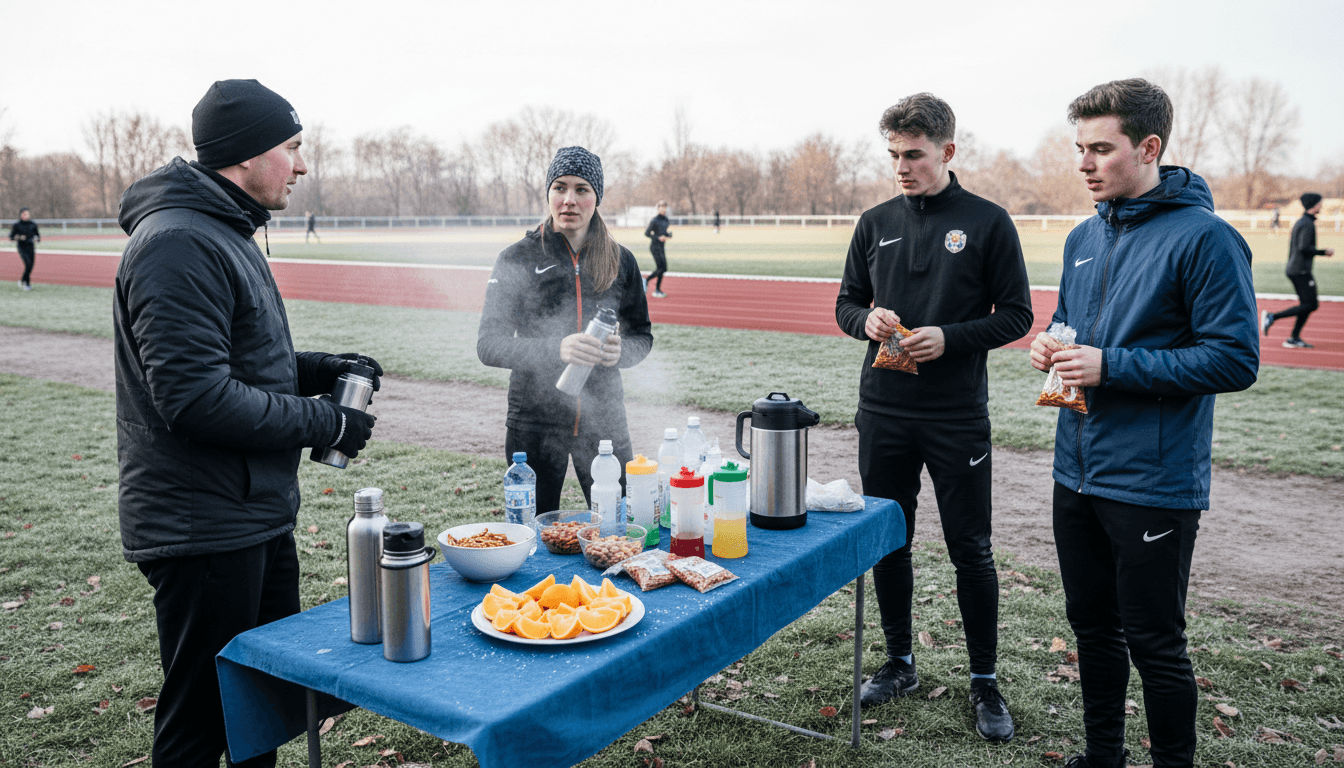
- Warm fluids and flavored drinks can increase buy-in when plain cold water is unappealing.
The Myth: You Don't Need to Hydrate in Cold Weather
Reality: You absolutely do.
Reality: You absolutely do. Dehydration is common in cold conditions because:
- You still sweat (under layers)
- Respiratory losses increase (1-2L over long runs)
- Thirst is blunted by up to 40%
Field use
A field protocol coaches can actually repeat
Morning
Check the athlete before practice starts
Dark urine, headache, and an empty bottle are red flags before the session even begins.
During training
Use planned drinking moments
Scheduled drink breaks beat thirst when the day is hot, dry, or altitude-adjusted.
After practice
Replace losses steadily
Push recovery fluids across the next few hours instead of one rushed bottle.
Unlock the rest of the manual
Full access opens every section, the ebook PDF, and the printable handout companion.
What to do next
Use it this week
Map the athlete's winter drinking pattern across the school day, not just practice.
Source topics
Sawka MN, Burke LM, Eichner ER, et al. (2007) ACSM position stand: Exercise and fluid replacement. Medicine & Science in Sports & Exercise, 39(2):377-390. • McDermott BP, Anderson SA, Armstrong LE, et al. (2017) National Athletic Trainers' Association position statement: Fluid replacement for the physically active. Journal of Athletic Training, 52(9):877-895. DOI 10.4085/1062-6050-52.9.02.