
Aspire guide
Injury Recovery
Injury Recovery manual
Fueling Through an Injury
An injury is not a reason to eat less. How to fuel healing — keep eating well, protect muscle, and involve a professional if weight fear takes over.
Why this matters
An injury is not a reason to eat less.
Read time
3 min
Audience
Athlete + Coach
Use it for
Injury Recovery
Start here
Return healthy and strong, not as light as possible.
Coach prompt
Is this athlete eating enough to actually heal?
Print & share
Printable handout preview
One-page sheet
Fueling Through an Injury
Read time
3 min
Audience
Athlete + Coach
Start with the printable
Return healthy and strong, not as light as possible.
Quick reference map
Use the guide like a structured handout
In the library
Format
Read the full ebook here, then jump to the one-page handout when you need the shareable version.
Best use
Open the sections you need, print the handout, then send both to coaches, parents, or athletes.
Quick start
Start here
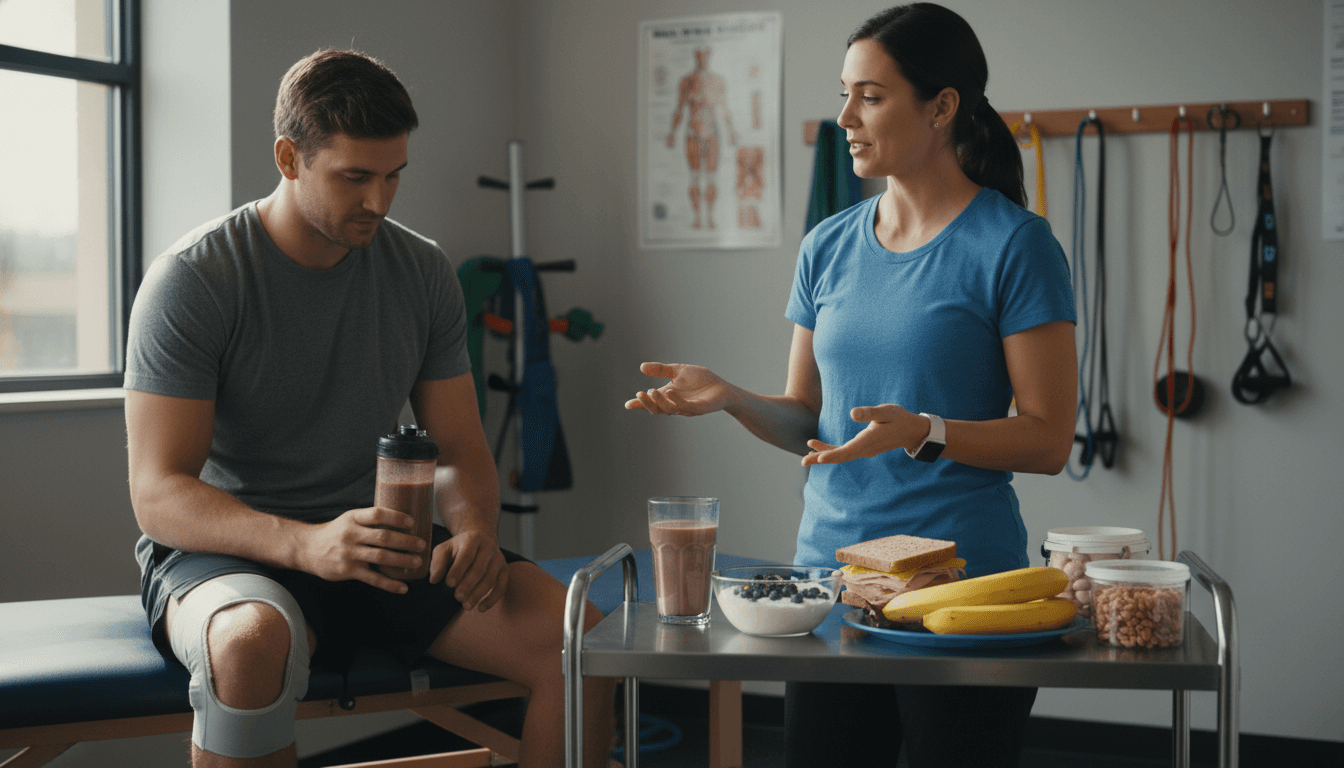
An injury is not a reason to eat less.

Watch the language
Injury plus body anxiety can turn risky fast
- Obsessive weighing and fear of carbs are red flags. Use the referral chain inside a school for who to tell, and in what order.
- Comments about getting 'soft' can push restriction harder.
Reset the goal
Healing is the job while training is down
- Healing tissue needs calories and protein every day.
- Eating less during injury usually slows rehab and delays the return.
Keep structure
Meal timing matters when training rhythm is gone
- Use regular meals and planned snacks instead of grazing all day.
- Protein at every meal, with produce and enough carbohydrate for rehab work.
What usually happens
- Training drops, so it feels like less food is needed.
- Appetite often stays about the same, because healing itself takes energy.
- Weight may shift a little in either direction — and that is normal and temporary.

When to bring in help
If fear about weight or body is driving how an injured athlete eats — eating noticeably less, avoiding foods, or anxious about gaining — that is a signal to involve the family…
If fear about weight or body is driving how an injured athlete eats — eating noticeably less, avoiding foods, or anxious about gaining — that is a signal to involve the family and a professional: a physician, a registered dietitian, and, when it is about body image or food fear, a mental-health professional. A…

Unlock the rest of the manual
Full access opens every section, the ebook PDF, and the printable handout companion.
What to do next
Use it this week
Is this athlete eating enough to actually heal?
Source topics
Smith-Ryan AE, Hirsch KR, Saylor HE, Gould LM, Blue MNM. (2020) Nutritional considerations and strategies to facilitate injury recovery and rehabilitation. Journal of Athletic Training, 55(9):918-930. PMID 32991705. • Melin AK, Heikura IA, Tenforde A, Mountjoy M. (2019) Energy availability in athletics: Health, performance, and physique. International Journal of Sport Nutrition and Exercise Metabolism, 29(2):152-164. • Mountjoy M, Sundgot-Borgen JK, Burke LM, et al. (2023) IOC 2023 consensus statement on REDs. British Journal of Sports Medicine, 57:1073-1098.