Aspire guide
Injury Recovery
Injury Recovery manual
Nutrition for Surgery Recovery
Pre- and post-operative nutrition to optimize surgical outcomes.
Why this matters
Pre- and post-operative nutrition to optimize surgical outcomes.
Read time
3 min
Audience
Athlete + Parent
Use it for
Injury Recovery
Start here
Surgery recovery goes better when food is part of the plan before the athlete gets home.
Coach prompt
If this athlete had surgery tomorrow, what three foods would make the first 72 hours easiest?
Print & share
Printable handout preview
One-page sheet
Nutrition for Surgery Recovery
Read time
3 min
Audience
Athlete + Parent
Start with the printable
Surgery recovery goes better when food is part of the plan before the athlete gets home.
Best next move
Use it this week
If this athlete had surgery tomorrow, what three foods would make the first 72 hours easiest?
Quick reference map
Use the guide like a structured handout
In the library
Format
Read the full ebook here, then jump to the one-page handout when you need the shareable version.
Best use
Open the sections you need, print the handout, then send both to coaches, parents, or athletes.
Quick start
Start here
Pre- and post-operative nutrition to optimize surgical outcomes.

Before surgery
Show up nourished, not depleted
- Eat normally in the days before surgery unless the medical team says otherwise.
- Prep easy meals and snacks before the hard first week arrives.
First days
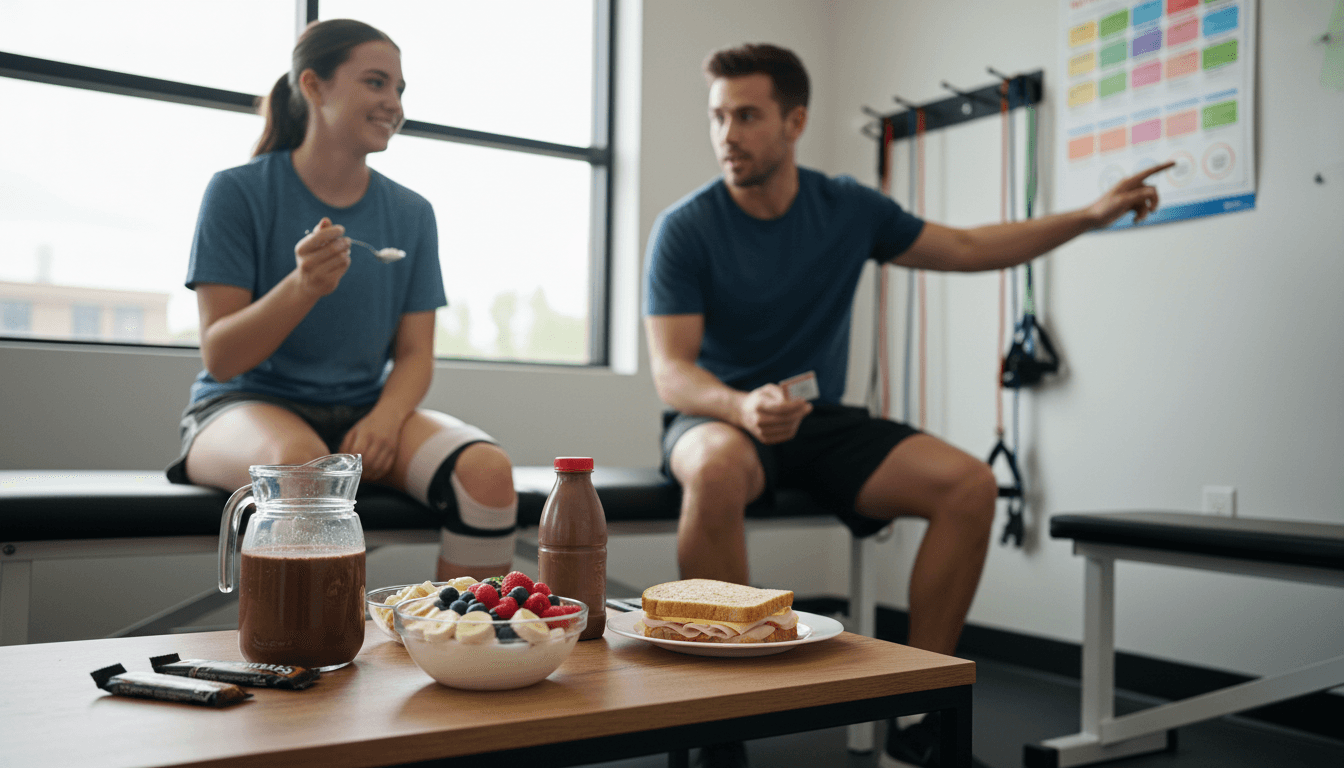
Simple foods often win the first 72 hours
- Use yogurt, smoothies, soup, oatmeal, eggs, toast, and milk when appetite is low.
- Protein still matters even if portions are smaller.
Medication side effects
Pain meds and inactivity can slow the gut
- Fluids, fruit, and fiber help when constipation creeps in.
- Do not wait three days to solve a gut problem.
Before the Procedure
Follow the facility's fasting and clear-liquid instructions exactly; do not use a generic internet…
Tell the surgical team about every supplement, energy product, herb, and medication. Some products…
Stock familiar foods that are easy to prepare, plus protein-rich options the athlete already…
Arrange help with shopping and meals so recovery does not depend on the injured athlete cooking.
The First Days
Nausea, constipation, fatigue, pain, and a low appetite can all change intake.
Nausea, constipation, fatigue, pain, and a low appetite can all change intake. Start with the texture and volume the medical team permits, then move toward normal meals as tolerated.
- Offer small meals or snacks every few hours instead of forcing one large plate.
- Include a protein-rich food when possible: yogurt, milk or fortified soy milk, eggs, tofu, beans, fish,…
- Add easy carbohydrate foods such as toast, rice, oats, potatoes, fruit, soup, or crackers. Healing still…

Unlock the rest of the manual
Full access opens every section, the ebook PDF, and the printable handout companion.
What to do next
Use it this week
If this athlete had surgery tomorrow, what three foods would make the first 72 hours easiest?
Source topics
Smith-Ryan AE, Hirsch KR, Saylor HE, Gould LM, Blue MNM. Nutritional considerations and strategies to facilitate injury recovery and rehabilitation. Journal of Athletic Training. 2020;55(9):918-930. PMID 32991705. • Close GL, Sale C, Baar K, Bermon S. Nutrition for the prevention and treatment of injuries in track and field athletes. International Journal of Sport Nutrition and Exercise Metabolism. 2019;29(2):189-197. PMID 30676133.