
Aspire guide
Track & Field
Track & Field manual
The Sprinter's Plate: Fueling Speed Events from 60m to 400m
A complete nutrition guide for sprint athletes covering energy systems, daily fueling, and meet-day strategy from the 60m to the 400m.
Why this matters
There's a myth that runs through nearly every sprint program in the country, and it goes something like this: "I only run for 10 seconds — how much food could I possibly need?"
Read time
6 min
Audience
Coach + Athlete
Use it for
Track & Field
Start here
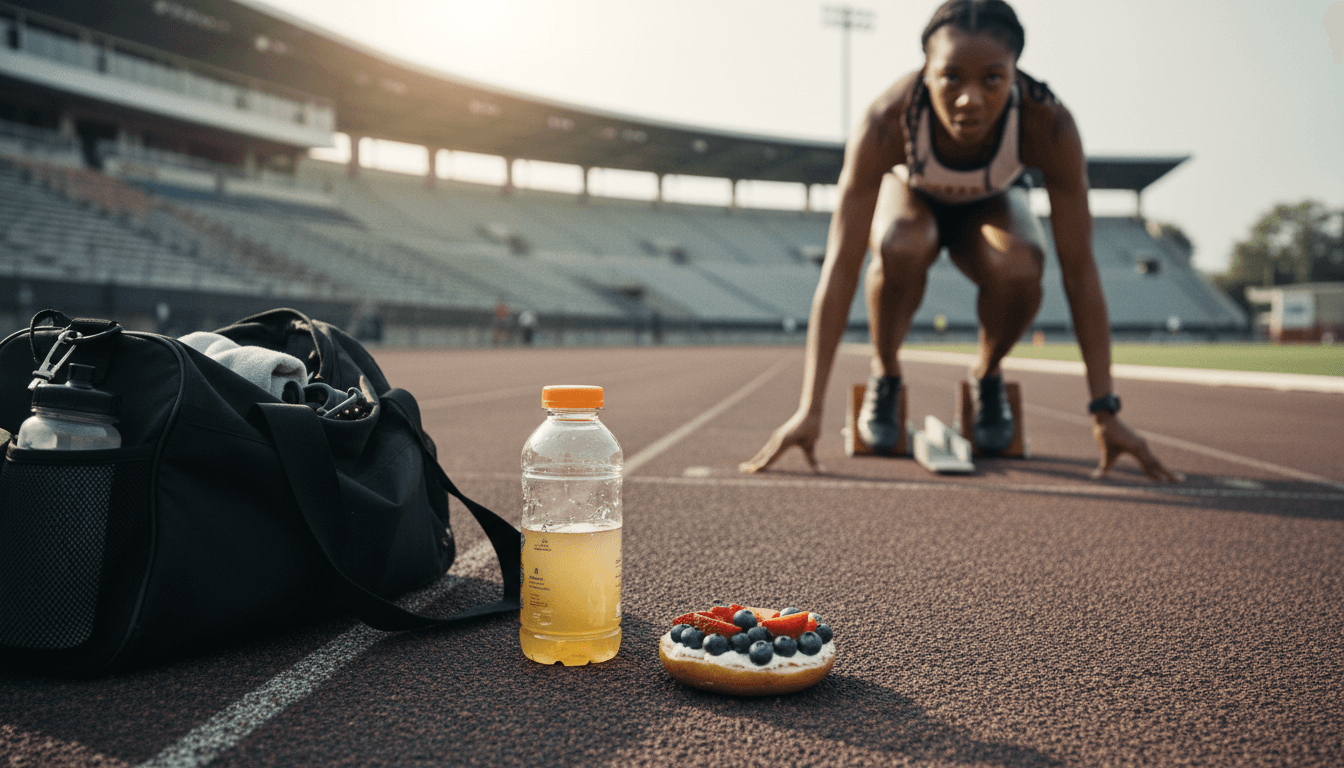
The sprinter's plate should look powerful, not restrictive.
Coach prompt
If sprint quality is flat, review the plate before you rewrite the session.
Quick reference
Topic snapshot
Key action
The Sprinter's Plate: Fueling Speed Events from 60m to 400m
Read time
6 min
Audience
Coach + Athlete
Start here
The sprinter's plate should look powerful, not restrictive.
Best next move
Use it this week
If sprint quality is flat, review the plate before you rewrite the session.
Quick reference map
Use the topic like a clear checklist
Protocol
Start here
Jump to this section and use it like a coaching quick reference.
Overview
The Energy Systems Behind Speed
Jump to this section and use it like a coaching quick reference.
Timeline
Protein: Timing Matters for Power Athletes
Jump to this section and use it like a coaching quick reference.
In the library
Format
Read the topic here, then download the PDF only when you need an offline copy.
Best use
Open the sections you need, then share the same topic link with coaches, parents, or athletes.
Quick start
Start here
A complete nutrition guide for sprint athletes covering energy systems, daily fueling, and meet-day strategy from the 60m to the 400m.
Daily plate
Speed athletes still need visible carbs
- Rice, oats, bread, fruit, potatoes, and pasta help power sessions stay sharp.
- A protein-only mindset usually leads to flat sprint quality.
Before training
A small pre-session snack protects top speed
- Bars, fruit, crackers, or toast work well before sprint and lift sessions.
- Explosive work on an empty tank usually looks worse than it feels at first.
After training
Recover fast enough to keep tomorrow powerful
- Carbs plus protein helps the next lift, sprint session, or relay set.
- Chocolate milk, sandwiches, or a real dinner shortly after training all fit.
The Energy Systems Behind Speed
To understand why sprinters need to eat, you need a quick tour of how the body produces speed.
To understand why sprinters need to eat, you need a quick tour of how the body produces speed. The good news: this is simpler than it sounds.
The phosphocreatine system (0–10 seconds) The 60m and 100m live almost entirely here. Your muscles store a small, rapidly available energy molecule called phosphocreatine (PCr) that powers explosive efforts lasting roughly 6–10 seconds. It requires no oxygen and produces energy almost instantaneously — which is why…
The glycolytic system (10 seconds–2 minutes) The 200m and 400m pull heavily from this system. Here, the body breaks down carbohydrates (glucose from food, glycogen from muscle stores) to produce energy without oxygen. The byproduct — lactate — accumulates as intensity continues. The 400m is one of the most…
Protein: Timing Matters for Power Athletes
Sprinters and jumpers have higher protein needs than their distance teammates — not because they run farther, but because they're doing more structural damage through heavy…
Breakfast
25–30g (eggs, Greek yogurt, milk)
Lunch
30g (chicken, turkey, beans, cheese)
Post-practice snack
20–25g (chocolate milk, protein shake, cottage cheese)
Dinner
30–35g (lean meat, fish, eggs)
Unlock the rest of the manual
Full access opens every section and the ebook PDF.
What to do next
Use it this week
If sprint quality is flat, review the plate before you rewrite the session.
Related tool
Event-specific nutrition
Match the guidance to the event group.
Open event-specific nutritionSource topics
sprinter nutrition • sprint fueling • 100m diet • 400m athlete meal plan • phosphocreatine system • speed athlete carbs