Inputs
- A few quick answers
- Timing, training, or body cues
Outputs
- A clear target, score, or risk level
- The next action to take today
Your Heart Rate Data
Formula estimate: 220 − age. Best: field-tested max HR.
Measure first thing in the morning, lying still, 3-day average.
Karvonen uses Heart Rate Reserve (Max − Resting) for more personalized zones.
Heart Rate Reserve
140 bpm
Training Zone Dashboard
Zone 1: Recovery
RPE 2-3Easy jogging, warm-up, cool-down. Should feel effortless. Full conversation possible.
125–139
BPM
Zone 2: Aerobic Base
RPE 4-5Easy-moderate running. The bread & butter of distance training. Can speak in full sentences.
139–153
BPM
Zone 3: Tempo / Threshold
RPE 6-7Comfortably hard. Lactate threshold pace. Can speak only in short phrases.
153–167
BPM
Zone 4: VO₂max Intervals
RPE 8-9Hard effort. 3-5 minute interval pace. Only a few words possible between breaths.
167–181
BPM
Zone 5: Anaerobic / Sprint
RPE 10All-out effort. Race finish kick, short hill sprints. Cannot speak at all.
181–195
BPM
Use this in practice
- Zone 2 should comprise 80% of weekly training volume — the Polarized Training model (Seiler, 2010).
- Tempo runs (Zone 3) are the most race-specific training zone for 5K/XC athletes.
- If an athlete can't hold a conversation on an 'easy' day, they're in Zone 3 — slow them down.
heart rate zone training
Practical examples
Track and event visuals that make the zone output feel tied to real athlete training instead of a generic cardio app.
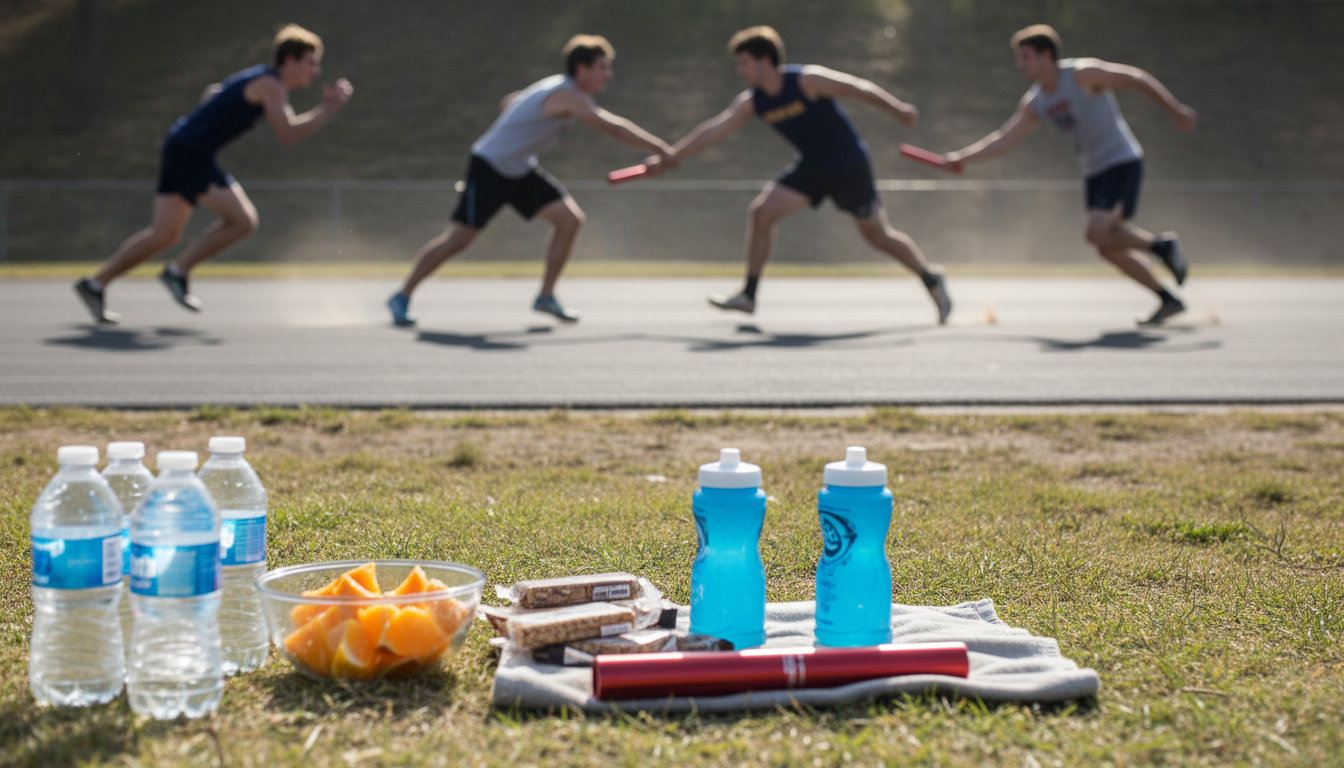
Relay fueling visual
A team-based event example for relay or meet-sequencing tools.

Distance-event fueling visual
A practical distance-running anchor for zones that support aerobic training and long sessions.

Hurdles fueling visual
Good for showing how a higher-intensity event still sits inside a structured zone plan.