Printable
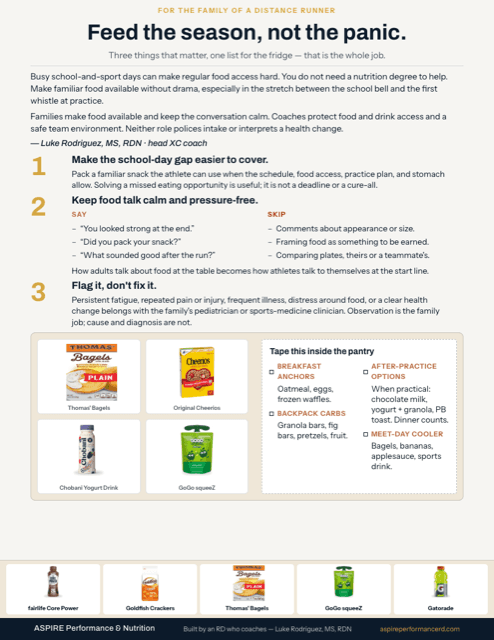
Parents' Quick Guide
Close the after-school fuel gap, keep food talk calm, and know when to flag a pattern to the coach.
Open and printLoading…
For parents
Parents usually own the groceries, the early bus breakfast, the post-practice dinner, and the call when something feels off. The best support is practical, neutral, and connected to the athlete’s real schedule.
Start here
Use this path for the questions that come home: what to pack, what to say, how to handle low morning appetite, how to support recovery, and when an observation belongs with a physician or sports dietitian.
Start with when the athlete can actually eat rather than debating whether a food is “good” or “bad.”
Stock a few repeatable breakfast, backpack, recovery, and race-travel options the athlete already accepts.
Use what you observed—energy, appetite, symptoms, recovery, or a change over time—and bring that pattern to qualified care.
Free printable handouts
Every link below opens the full public handout, with a print button and the safety context attached.
Close the after-school fuel gap, keep food talk calm, and know when to flag a pattern to the coach.
Open and print
The kitchen setup and the family language around food matter as much as the grocery list itself.
Open and print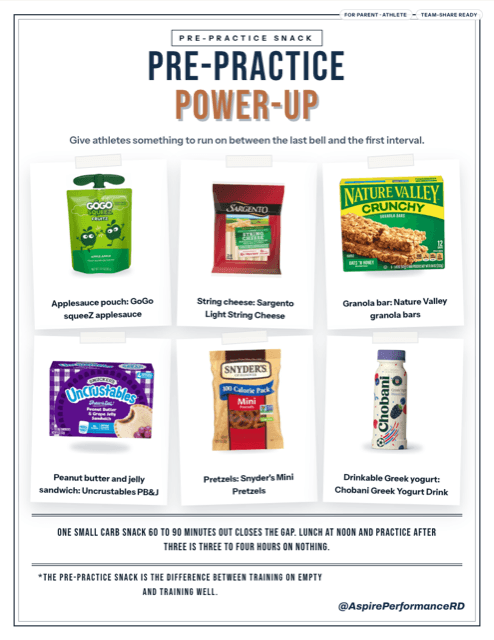
Give athletes something to run on between the last bell and the first interval.
Open and print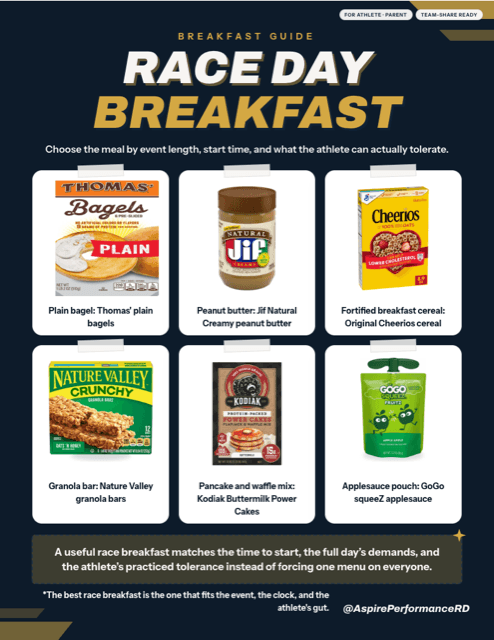
Choose the meal by event length, start time, and what the athlete can actually tolerate.
Open and print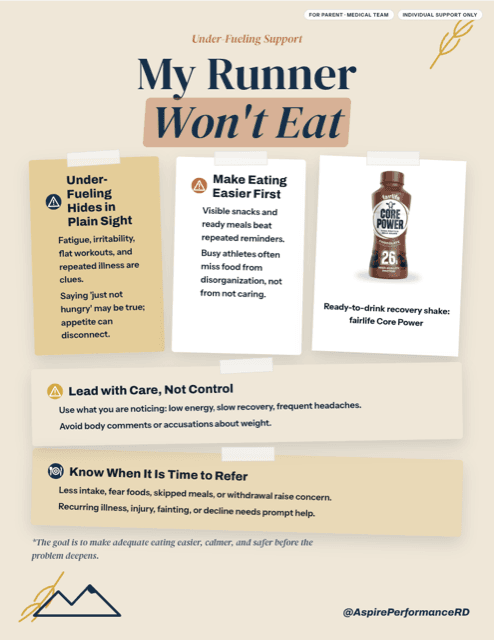
Most under-fueled high school runners are not being defiant. They are busy, disconnected from appetite, or quietly overwhelmed by food.
Open and print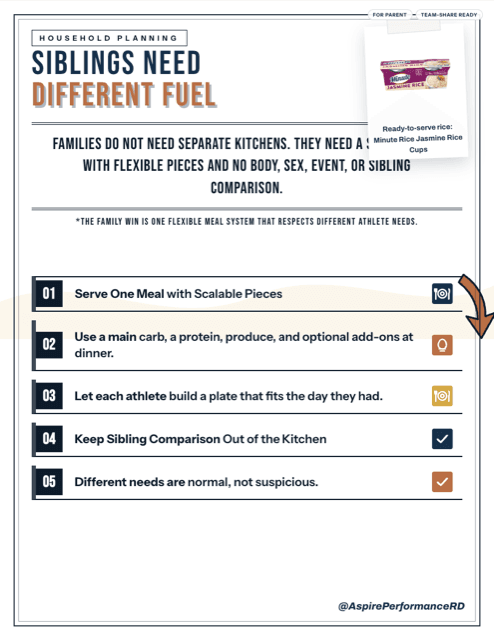
Shared meals can still work when schedules, hunger, tolerance, culture, access, and individual care plans differ.
Open and print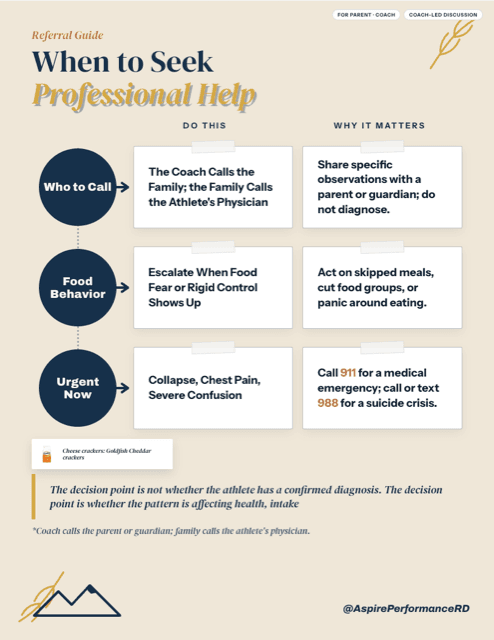
Parents and coaches do not need to diagnose the issue. They need to recognize when the pattern is beyond normal sports nutrition support.
Open and printPut it into practice
These tools organize timing, access, packing, and the next handoff. They do not diagnose an athlete or promise an outcome.
General education supports the household; it does not diagnose or treat an individual athlete. For athletes under 18, keep a parent or guardian involved in symptoms, supplements, and individualized targets.
See 1:1 nutrition consults