Printable
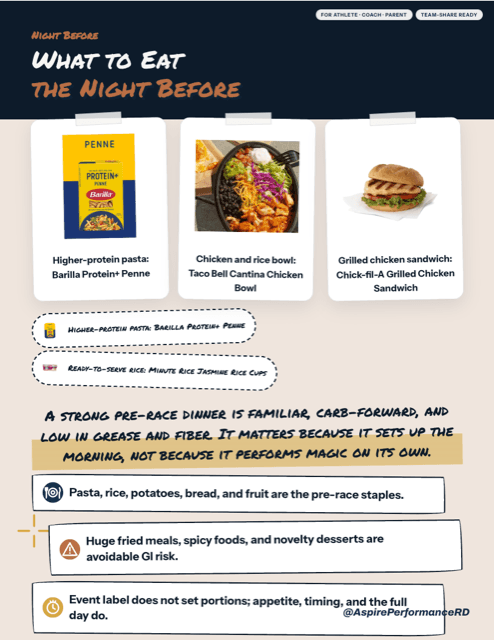
What to Eat the Night Before
Dinner should top off glycogen and calm the gut, not turn into a reward meal.
Open and printLoading…
Race-day nutrition
The best race plan is familiar, portable, and practiced. It accounts for the night before, the bus, the athlete who loses their appetite, a meet that runs late, and the food available afterward.
Start here
This path organizes the pieces families search for separately—pre-race dinner, breakfast, snacks, meet delays, and post-race recovery—into one sequence. It does not introduce a new food or supplement on competition day.
Write down wake-up, departure, arrival, warm-up, and start time before choosing food.
Use a meal and backup snack already tested before a workout with similar timing.
Bring a simple carbohydrate option, fluids, and a recovery choice that still work if the schedule moves.
Free printable handouts
Every link below opens the full public handout, with a print button and the safety context attached.
Dinner should top off glycogen and calm the gut, not turn into a reward meal.
Open and print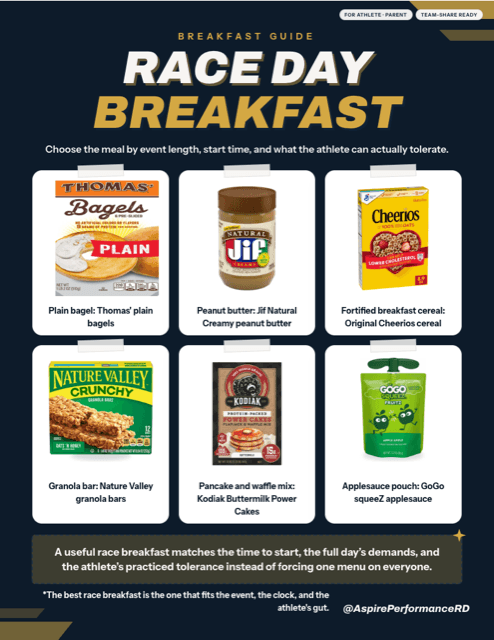
Choose the meal by event length, start time, and what the athlete can actually tolerate.
Open and print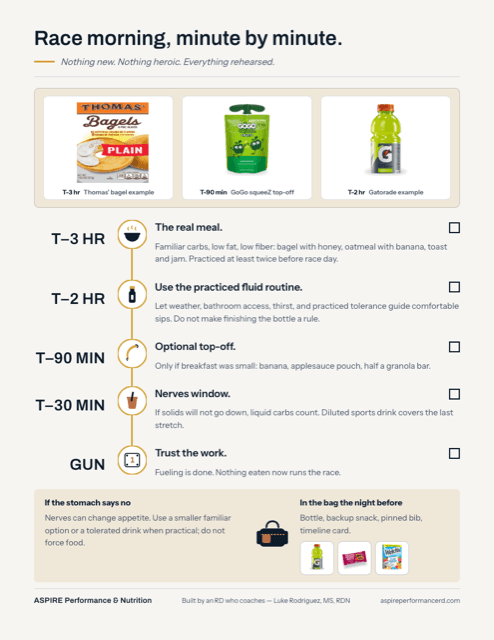
A T-minus timeline from wake-up to the gun, so nothing gets decided for the first time on race morning.
Open and print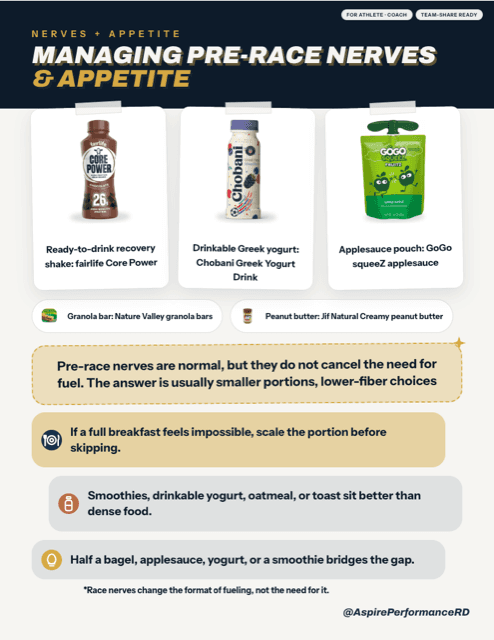
A nervous stomach still needs fuel, just in a calmer format.
Open and print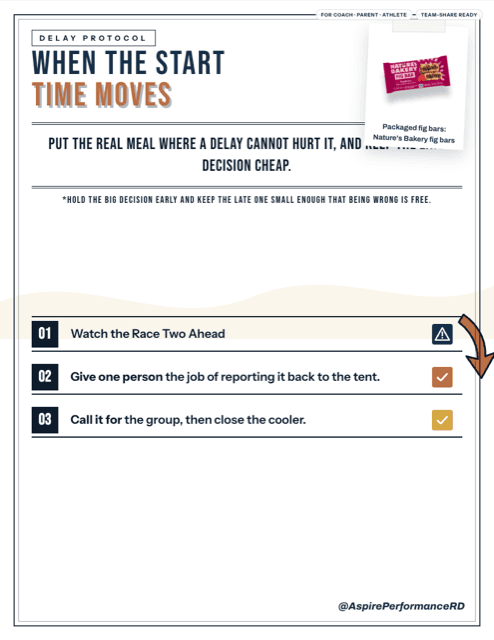
A countdown has one input and the input is an estimate. Anchor the big meal early and keep the late decision small.
Open and print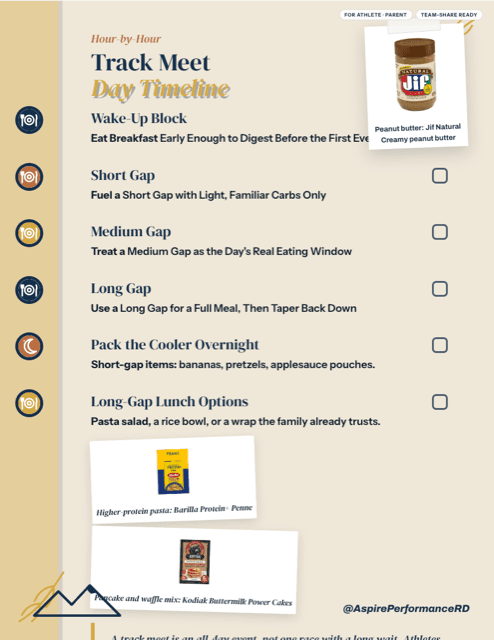
Plan the day by the length of the gap before the next event, not by clock time, since meet schedules always slip.
Open and print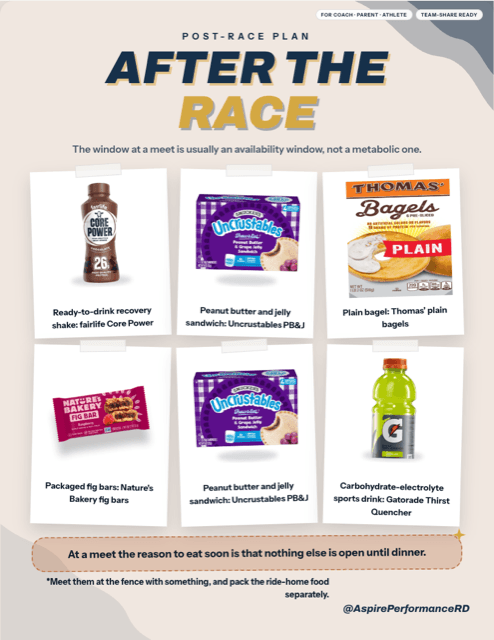
The window at a meet is usually an availability window, not a metabolic one. Here is what is actually within reach.
Open and print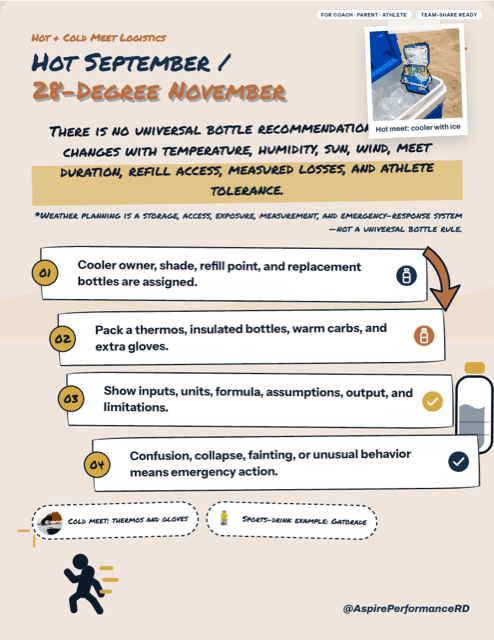
Use the forecast to set storage, refill, fluid, food, shade or warmth, and backup logistics—then individualize with measured sweat data when available.
Open and printPut it into practice
These tools organize timing, access, packing, and the next handoff. They do not diagnose an athlete or promise an outcome.
Race-day education should use familiar foods and practiced routines. Individual gastrointestinal symptoms, medical conditions, supplements, or prescribed targets require individualized care.
See 1:1 nutrition consults