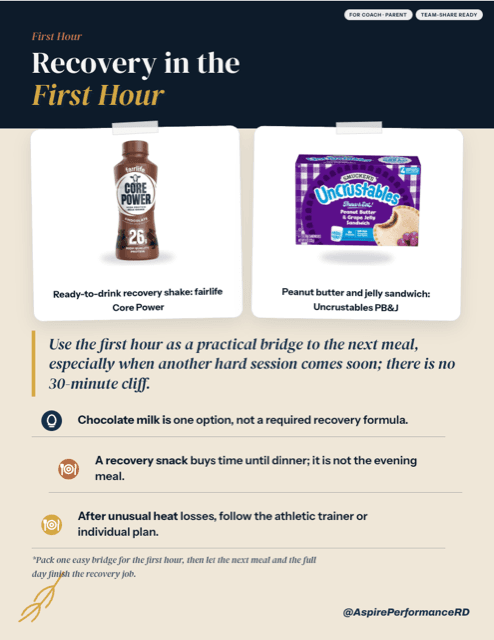
Printable
Recovery in the First Hour
Turn the first hour after hard training into a habit, not a 30-minute panic.
Open and printLoading…
Recovery nutrition
A useful recovery plan connects the first available food and fluid to dinner, sleep, the next school day, and the next session. It also recognizes when a repeated pattern needs more than a food swap.
Start here
Use this path for hard workouts, races, late practices, injury return, and the athlete who stays flat. The goal is a workable handoff, not a rigid “window” or a promise that one product fixes recovery.
Pair carbohydrate, protein, and fluid when another demanding session is coming soon.
A recovery snack supports the next meal; it does not replace the rest of the evening.
Repeated fatigue, pain, appetite changes, or performance decline are reasons to involve the family and qualified care.
Free printable handouts
Every link below opens the full public handout, with a print button and the safety context attached.
Turn the first hour after hard training into a habit, not a 30-minute panic.
Open and print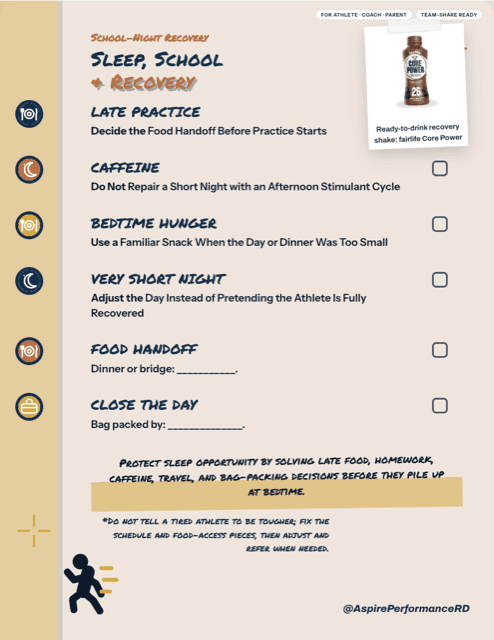
Decisions for homework, late practice, early buses, caffeine, bedtime hunger, naps, and the morning after a short night.
Open and print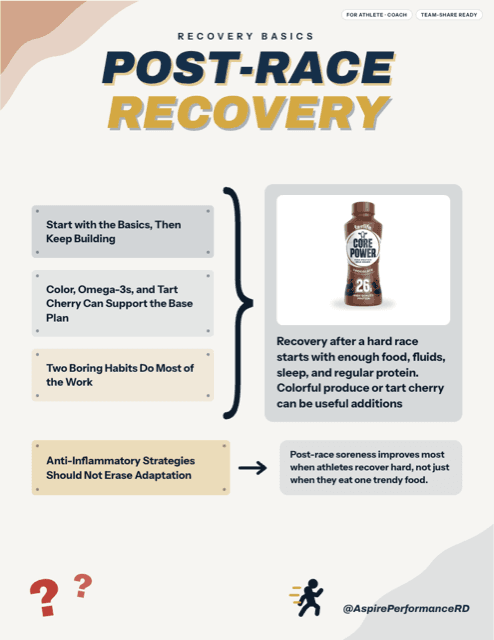
Support recovery after hard racing with food, fluids, and sleep before you chase fancy fixes.
Open and print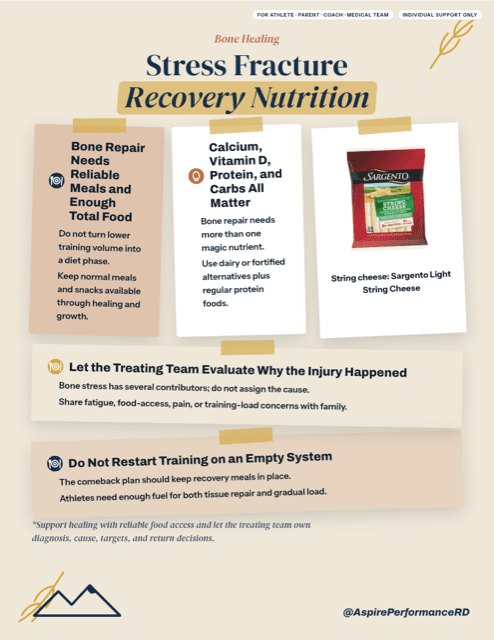
Bone recovery needs enough energy, enough calcium, enough vitamin D, and enough patience to rebuild.
Open and print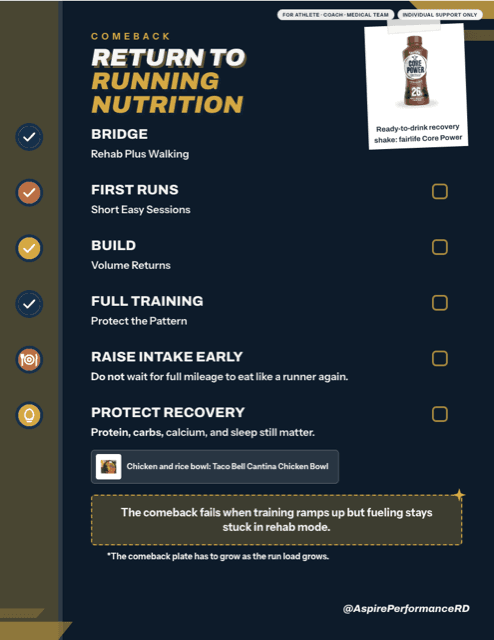
The athlete returning from injury needs enough fuel for both healing and reloading training stress.
Open and print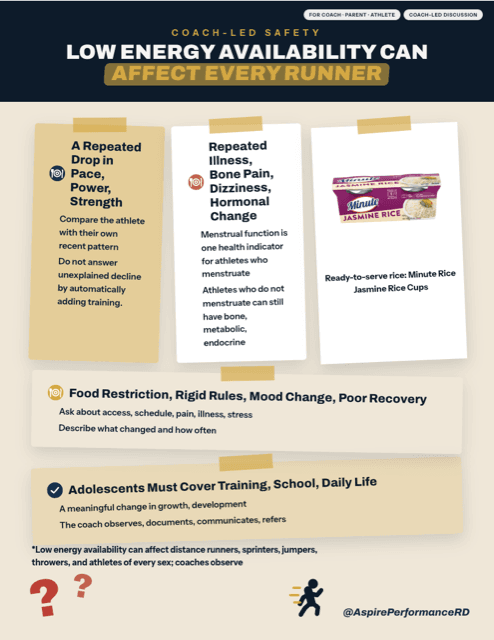
Female and male runners can develop health and performance problems when intake repeatedly does not cover training and normal body function.
Open and print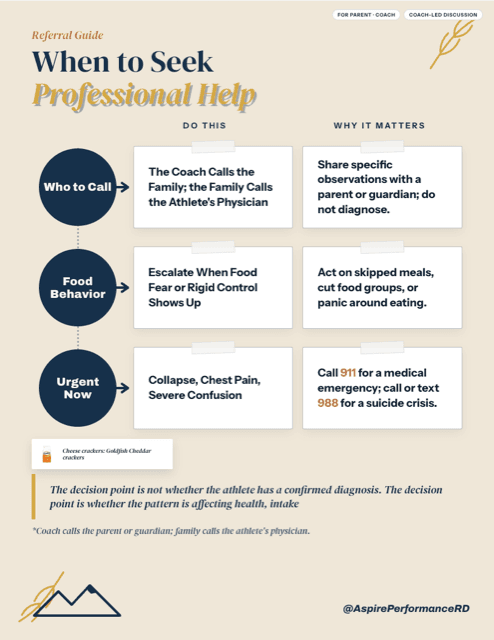
Parents and coaches do not need to diagnose the issue. They need to recognize when the pattern is beyond normal sports nutrition support.
Open and printPut it into practice
These tools organize timing, access, packing, and the next handoff. They do not diagnose an athlete or promise an outcome.
Nutrition education does not diagnose an injury, RED-S, an eating disorder, or another medical condition. Urgent symptoms use the emergency plan; persistent concerns go to qualified care.
See 1:1 nutrition consults